
Dry ice blasting is a simple, nonabrasive cleaning process that uses CO2 pellets as an impact medium for removing surface contaminants without the use of chemicals, abrasive materials, high temperatures, or steam. Dry ice blasting is a form of cleaning with the help of Carbon Dioxide, where dry ice, the solid type of carbon dioxide, is accelerated up in a pressurized air stream and guided to a surface to clean it.
1. Cleaning of the Weld Line.
The Weld line is the line where two flow fronts meet when there is the inability of two or more flow fronts to weld together, during the molding process.
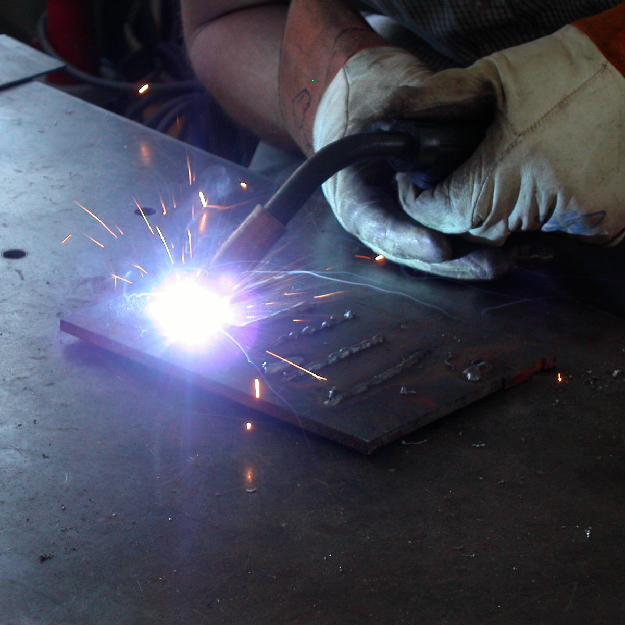
Weld slag consists of small, high temperature, high-velocity metallic particles that are let out during resistance welding. The accumulation of weld slag, grease, and mud, and sealant brings about operational difficulties. Extracting weld slag is a vital component in cleaning robotic weld cells.
On automated weld lines, slag, splatter, smoke, oil and dampering adhesive develop production equipment. This causes misalignment. The robot will then stop welding at this point hence creating scrap and causing equipment failure and production downtime.
The traditional cleaning strategies to remove weld splash and slag from welding lines, cells and robots with the help of a hammer and chisel can damage the weld line equipment and eventually lead to increased downtime.
Dry ice blasting systems give an effective, economical and delicate removal solution for slag and scatter development. Dry ice cleaning systems utilize non-abrasive media as reused CO2 pellets that will not damage surfaces. The mix of dry ice cleaning’s kinetic energy and thermal effects break the connection between the dirt and surface, lifting away contaminants. Dry ice blast cleaning has helped many automotive companies cut their mold-buildup cleaning costs by over $50,000 a year
2. Unclogging of rollers before painting
Before the painting process, cars and auto body frames travel through an enclosed area where a gray-like substance called e-coat is splashed on the auto edge. E-coat is a protective layer applied before paint to prevent rusting. The rollers that help the auto frames through this enclosed area accumulate buildup of e-coat which makes them clog and slow down the process. At the point when the rollers slow down due to clogging, there is an increase in production downtime and failures.
Pressure washing has been used to unclog the rollers, however this cleaning method creates over-spray and secondary waste, resulting in additional cleanup. Dry ice blasting can remove the e-coat material in less time and can keep the rollers cleaner as compared to pressure washing.
Automated dry ice blasting systems provide a uniform clean each time that helps to ensure a quality clean that reduces rejected parts. With the integration of an automated dry ice blasting system inside the production line, the automotive industry is seeing further reductions in downtime, improvements to a limited extent quality.
3. Mold Cleaning
Mold cleaning implies the removal, cleaning, sanitizing, destruction, or other treatment, including preventive activities, of mold or mold-contaminated matter.
Dry ice blasting permits operators to clean molds while they are as yet hot and in the press. Cleaning with dry ice enables molders to optimize their manufacturing cycle by cleaning contaminants from pits, vents, and hard to-reach at places quicker, in a better and more economical way which are way better than the traditional methods .This can reduce cleaning times by as much as 75% and decrease annual mold cleaning costs by as much as $50,000.
There was a reduction by 80% with the usage of dry ice blasting, while cleaning plastic injection molds, compression molds and permanent aluminium molds
Cleaning of tyre Molds
A tire mold is a precision mold that gives a tire its final shapeA significant problem looked by tire manufacturers is mold fouling. Build-up of cured material and mold release agents causes staying molds, blemishes and unwanted flash on final parts, making them unusable and requiring press shutdown for cleaning.
Dry Ice Blasting helps tyre molders to reduce the production shutdown, labor costs and cleaning time. Additionally, it forms no secondary waste and also helps in keeping the environment clean.
Conclusion:
Dry Ice Blasting helps to Improve product quality and is a non- abrasive method which causes no damage to molds and thus helping in reducing the scrap. They help in meeting the stringent industry demands and help decrease cleaning time and labor costs.
- Doesn’t leave behind any secondary waste, in light of the fact that the dry ice particles sublimate on sway – changing over from a solid to a gas.
- Cleans without damage to sensors and other delicate component
- Is safe and non-toxic
- Doesn’t make downstream contamination
- Replaces ineffective and costly labor intensive cleaning methods
- Decreases exposure to perilous chemical cleaning agents
References: